The Bottom-Line Difference Between Low-Fat and High-Fat Cocoa Powder
A technical breakdown for industrial bakeries and compound chocolate manufacturers.
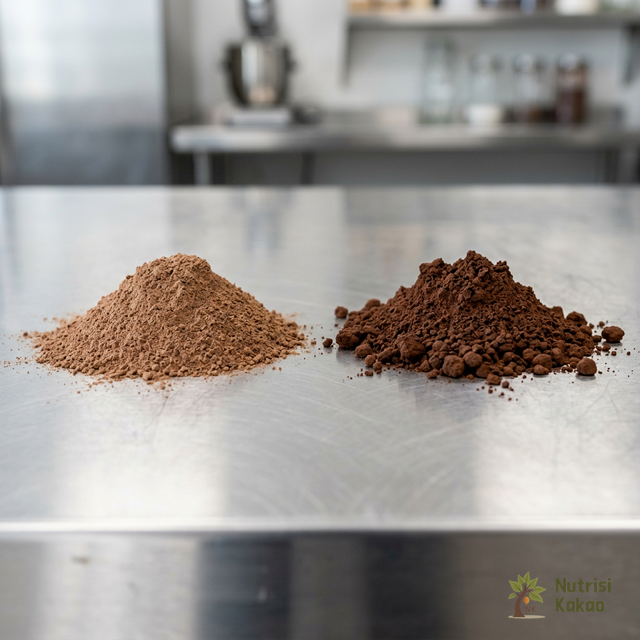
The numbers "10/12" and "20/22" on a cocoa powder specification sheet refer directly to the percentage of residual cocoa butter remaining after the cocoa liquor is pressed. While 10-12% (low-fat) is the industry standard for bulk applications, 20-22% (high-fat) serves entirely different performance requirements. Choosing the wrong specification can lead to dry crumbs, fat bloom, or unnecessary cost overruns.
1. Texture and Moisture Retention in Baking
10/12% Fat (Low-Fat): This grade has a very fine, dry consistency. Because it contains less fat, it disperses efficiently in dry mixes and prevents clumping during bulk storage. However, in baked goods like muffins or pound cakes, using 10/12% without compensating for the lost fat can result in a dry, crumbly mouthfeel.
20/22% Fat (High-Fat): The additional 10% cocoa butter drastically improves moisture retention. High-fat cocoa powder blends seamlessly with dairy and added oils, yielding denser, fudgier textures (e.g., premium brownies and soft-baked cookies) and a noticeably richer, creamier mouthfeel.
2. Flavor Intensity and Dispersion
Cocoa butter is a primary carrier for volatile flavor compounds. Therefore, 20/22% fat cocoa powder provides a more profound, lingering chocolate impact and effectively masks harsh, bitter notes. Conversely, 10/12% powder offers a sharper, more direct cocoa hit, which can be advantageous if you want the chocolate flavor to immediately punch through a heavy, sweet matrix.
3. Compound Chocolate Manufacturing
When formulating compound chocolate, manufacturers replace expensive cocoa butter with more cost-effective hard fats (like hydrogenated palm kernel oil) to avoid the need for tempering. Here is how fat content plays a role:
- Cost Optimization: Since compound chocolate already contains 35-40% added hard fats for stabilization and snap, adding 20/22% fat cocoa powder can make the final product excessively greasy or alter its rheology (flow properties). Therefore, 10/12% fat cocoa powder is overwhelmingly preferred in standard compound chocolate production for stability and cost-efficiency.
- Premium Fillings & Spreads: If you are manufacturing high-end truffles, fat-based fillings, or premium chocolate spreads where "melt-in-the-mouth" luxury is the primary selling point, upgrading to 20/22% fat is a justifiable ROI.
The Cost-Benefit Reality
High-fat (20/22%) cocoa powder usually receives a higher quote due to the inherently high value of the cocoa butter it retains. For high-volume, cost-sensitive items like dry baking mixes or standard compound coatings, 10/12% is the correct technical and financial choice. For artisanal desserts, rich frostings, and premium baked goods where "chocolate is the hero flavor," the 20/22% upgrade is essential.